
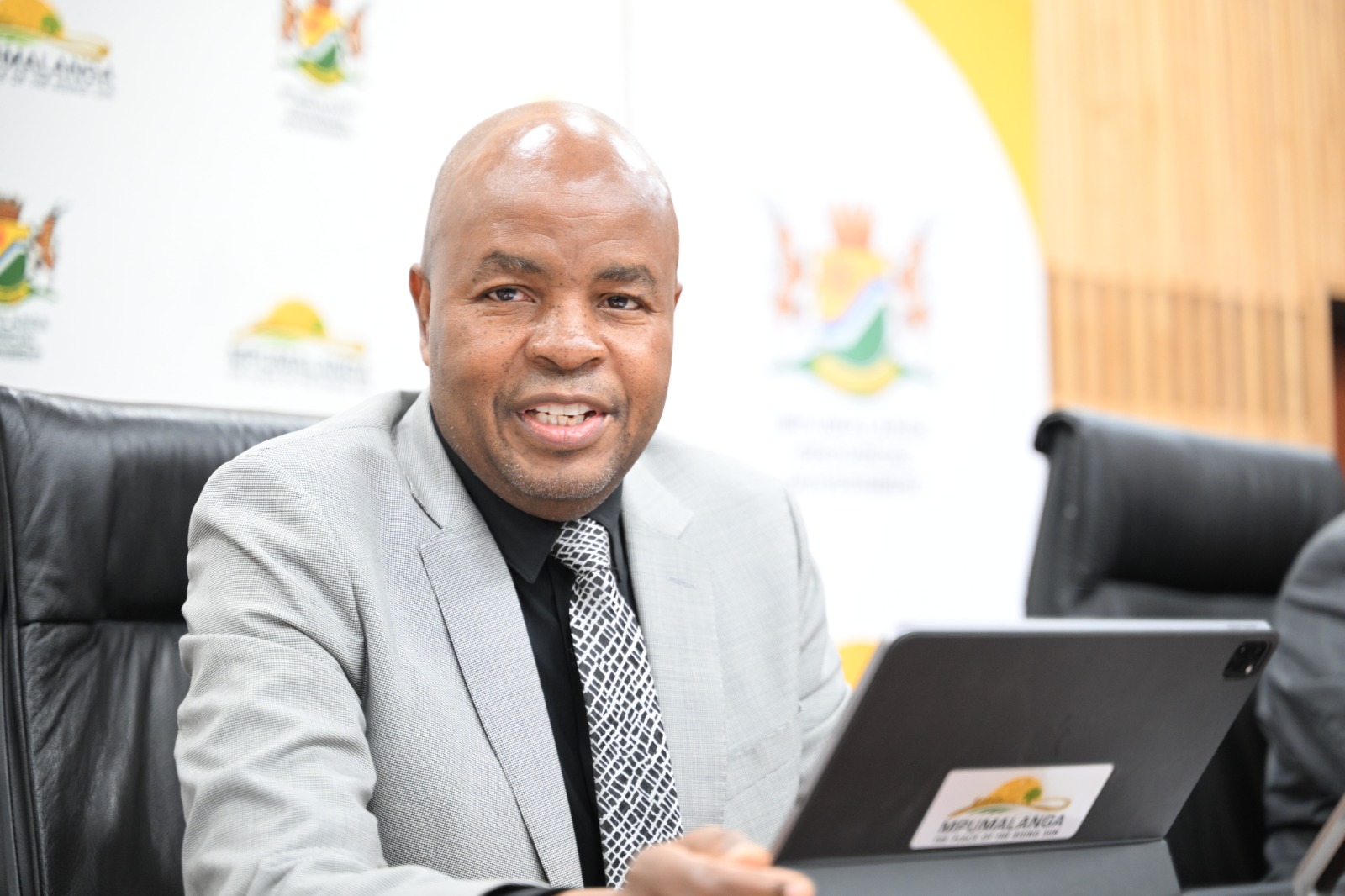
Skills development and the preparation of Mpumalanga's workforce for the future, took centre stage at the Mpumalanga Human Resource Development Council (MHRDC) meeting. The session was convened by the Premier, Mr Mandla Ndlovu at the Nkangala District Council Chamber, in Middelburg on Tuesday.
The Council brought together government, business, organised labour, academia, civil society, SETAs, TVET Colleges and development agencies, and seeks to identify critical skills shortages, strengthen education and training interventions, and develop practical solutions to address skills gaps and development opportunities.
According to Statistics South Africa's Quarterly Labour Force Survey for Quarter 1 of 2026, Mpumalanga's unemployment rate increased to 36.3%, while youth unemployment remains alarmingly high at 44.7%, highlighting the urgent need for targeted skills development and employment creation initiatives.
Mr Maliviwe Lumka, Head of Secretariat of the National Human Resource Development Council (HRDC), emphasised that South Africa continues to face significant challenges in Mathematics and Science education. He stressed that these critical skills are essential to drive advanced technologies, address scarce skills shortages and position the country to compete effectively in a rapidly changing global economy. He further highlighted the importance of a skills revolution that equips young people with in-demand skills, particularly in the digital and green economy sectors.
The meeting also received a presentation from Ms Mamphoku Khuluvhe on the Just Energy Transition Implementation Plan (JET IP) 2023–2027. The presentation focused on workforce readiness for emerging green sectors and outlined five flagship interventions within the JET Skills Portfolio: Tier JET Skills Ecosystems, Skills Development Zones (SDZs), JET Skills Needs Assessments, Capacity Development for Institutions, and Foundational Skills Development aimed at strengthening institutional capability to implement, manage and monitor JET skills interventions.
Premier Ndlovu emphasised the importance of collaboration among all stakeholders to ensure that the youth in Mpumalanga benefit from the opportunities created through the Council. He noted that sectors such as mining, energy, agriculture, manufacturing, tourism, logistics and emerging digital industries require a skilled, productive and work-ready workforce capable of driving economic growth and creating jobs.
The Premier also underscored the importance of lifelong learning, noting that artificial intelligence, automation, digitalisation and technological innovation are rapidly transforming the workplace. He commended the University of Mpumalanga for its commitment to lifelong learning and continuous professional development.
"Let this Council become a catalyst for transformation, a centre of innovation, a vehicle for inclusive growth, and contribute meaningfully to the creation of a prosperous, skilled and capable Mpumalanga."